
PHINMA Education Commits to Combat Child Malnutrition, Leads First 1,000 Days Program

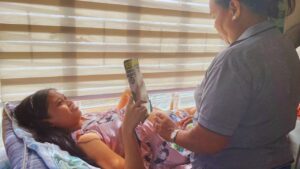
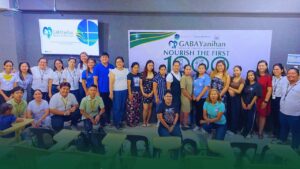
PHINMA Education schools are extending care to their neighboring communities through the F1KD program,
offering steady care and support for moms and their kids during the first 1,000 days.
PHINMA Education is extending its mission of making lives better beyond its schools, championing maternal and child nutrition through its First 1,000 Days (F1KD) program, which supports underserved families living around its campuses.
The F1KD program provides holistic support for mothers and children during the crucial period from conception to a child’s second birthday—a window proven to shape lifelong health, learning capacity, and overall well-being.
“When malnutrition strikes in the first 1,000 days, the damage is often irreversible. This short window determines whether a child will thrive or face lifelong challenges,” PHINMA Education President and CEO Chito Salazar said.
According to Nutrition International, stunting affects 3.4 million Filipino children under five, with poor nutrition reducing workforce productivity and costing the economy US$8.5 billion (P496 billion) annually.
Through the F1KD Initiative, PHINMA Education schools are reaching out to neighboring communities as caring partners, helping families build healthier beginnings. Students, faculty, and staff come together to offer hands-on support through home visits, maternal checkups, nutrition education sessions, and breastfeeding and family planning seminars, ensuring that mothers receive steady care, guidance, and encouragement.
The initiative is currently implemented in adopted barangays across seven PHINMA Education schools located in Quezon City, Iloilo City, Cebu City, Pangasinan, Nueva Ecija, Laguna,and Cagayan de Oro.
“We want our schools to be good neighbors to the communities around us,” Salazar said. “By working with families in the first 1,000 days, we help lay the foundation for healthier, stronger communities.”
The F1KD program brings together the collective efforts of PHINMA Education students, faculty, and staff. Nursing students conduct prenatal education sessions, psychology students provide psychosocial support, tourism and hospitality management students prepare nutritious meals, while criminology students, scholars, and student council leaders assist in feeding programs, health monitoring, and other maternal care activities.
Schools also conduct capacity-building sessions with barangays and local government offices to sustain the movement—developing proactive health campaigns, monitoring systems, and long-term community partnerships.
To date, the program has served 90 pregnant mothers, resulting in the birth of 74 healthy babies meeting the World Health Organization’s reference standards for weight (above 2.5 kg) and length (above 46 cm). 16 mothers are still expecting.
“If we don’t act, an entire generation will grow up stunted—in body, mind, and future. This isn’t just a health issue—it’s also an education issue, an economic issue, and a poverty cycle we can break if we act early enough.” PHINMA Education F1KD Program Lead and Community Development specialist Heide Foulc said.
Sustaining the program calls for continued collaboration among the Department of Health, National Nutrition Council, local government units, barangay health workers, and private partners.
“This is more than a health program—it is a community effort and a nation-building initiative. Together, we can ensure that every Filipino child has the right start in life,” Salazar stressed.(30)
About F1KD
The F1KD program is a PHINMA Education initiative launched in 2018 to address malnutrition and stunting in the communities served by PHINMA schools. Guided by our mission to make lives better, we serve as an active partner in building healthier, stronger communities.
To learn more or get involved, please contact Heide Foulc at [email protected].
About PHINMA Education
PHINMA Education is the largest private school network in Southeast Asia, operating schools across the Philippines and Indonesia. Since 2004, it has pioneered student-centered learning strategies that empower first-generation college students to succeed. It is a subsidiary of PHINMA Corporation, a Filipino-owned conglomerate with strategic interests in education, housing, hospitality, and construction focused on building the nation and making lives better.