
PHINMA Education Establishes Presence in Butuan through PHINMA COC, Opens this July
PHINMA Cagayan de Oro College (COC), the largest private college in Northern Mindanao, is officially expanding to Butuan City to bring its accessible, student-centered, and success-focused college education to underserved communities in the Caraga region.
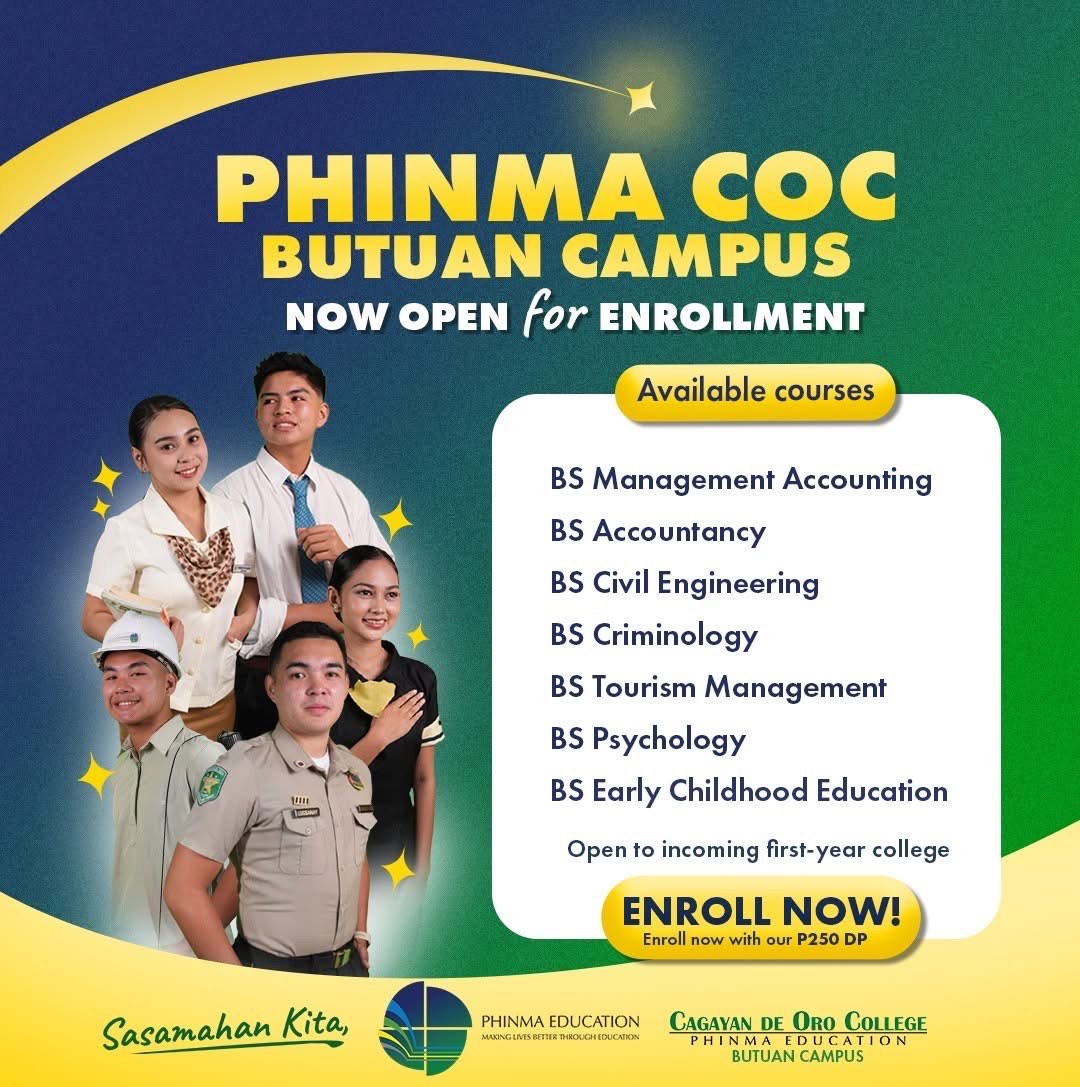
The Commission on Higher Education (CHED) has officially approved the opening of the PHINMA COC Butuan campus, which will offer programs in Accountancy, Management Accounting, Psychology, Early Childhood Education, Criminology, Civil Engineering, and Tourism Management. These programs are aligned with growing regional demand for professionals in key sectors driving growth across Caraga.
“For years, many students from Butuan and nearby provinces have chosen to study at PHINMA COC in Cagayan de Oro because of the quality of education, strong board exam performance, and career opportunities our graduates achieve,” said PHINMA COC Network COO Mark Macaventa. “With PHINMA COC Butuan, we are making that same proven educational experience more accessible to students in Caraga — closer to their homes, families, and communities.”
PHINMA COC currently serves more than 38,000 underserved students across Carmen, Puerto, Iligan, and nearby communities. With the expansion in Butuan, the institution expects to reach up to 50,000 more learners across the Caraga region. The campus is open to students from diverse backgrounds, including working students and those returning to complete their studies.
The new campus will also offer PHINMA Education’s Hawak Kamay (HK) Scholarship program, which does not require an entrance examination and does not impose maintaining grades. The scholarship remains valid until students complete their degree, helping remove barriers to entry and ensuring as well continuing accessibility to various forms of support throughout their college journey.
With this development, PHINMA Education expands access to college education in Caraga, reinforcing its role in helping families use higher education as a pathway out of poverty.